
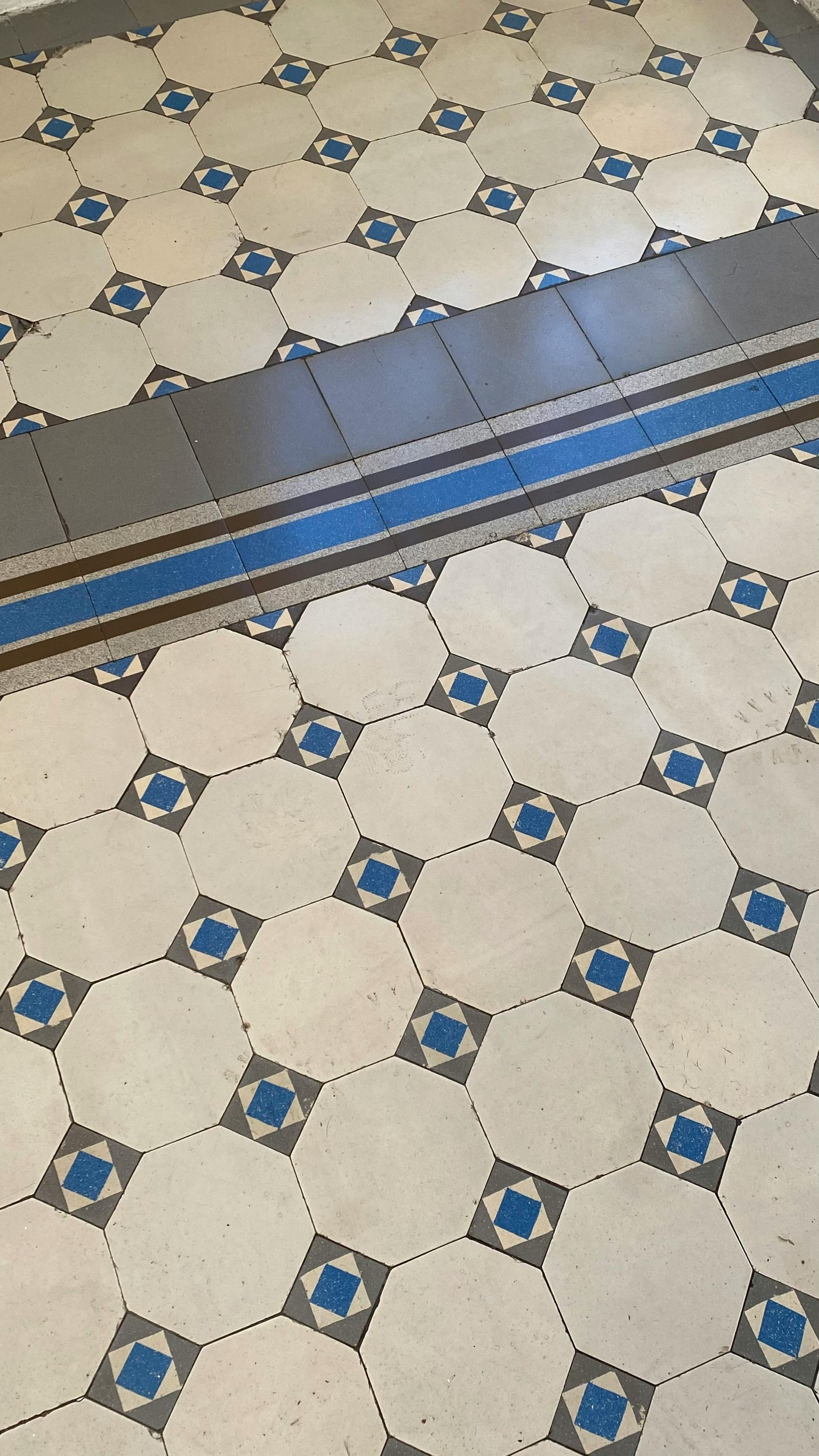
Floors Built to Stay Level and Intact
Tile in Farmington for bathroom floors and walls prone to settling and grout failure
Alkali soil in Davis County creates conditions where floor settling occurs frequently, causing grout to crack and tiles to loosen over time. The Bald Guy Handyman provides tile installation throughout Farmington, Layton, Bountiful, Centerville, Kaysville, and Ogden with an emphasis on proper substrate preparation that prevents these failures. Subfloor stability checking identifies problem areas before installation begins, ensuring the tile system has a solid foundation that withstands the settling common in this region.
Proper tile installation requires checking subfloor level and stability first, then addressing imperfections with leveling compounds and cement board underlayment, particularly in bathroom installations where moisture exposure compounds any underlying structural weakness. This process takes longer than direct installation but eliminates the primary causes of premature tile failure in local homes.
Schedule a subfloor evaluation to assess substrate conditions before tile installation begins.
What Substrate Preparation Actually Accomplishes
Thorough substrate preparation starts with measuring the subfloor for level variation and testing for movement under weight, followed by installing cement board underlayment that provides a stable, moisture-resistant base for tile adhesion. This foundation-focused approach addresses the settling issues caused by local soil conditions and prevents the tile system from cracking as the structure shifts over time.
You notice floors that remain level without lippage between tiles, grout lines that stay intact without cracking, and bathroom tiles that hold firm even in high-moisture areas where condensation occurs regularly. The Bald Guy Handyman's preparation work means the tile surface performs as a unified system rather than individual tiles responding differently to substrate movement.
The installation includes waterproof membrane application in wet areas and expansion joints at transitions where tile meets other flooring materials, which accommodates normal structural movement without causing visible cracks. Grout selection depends on joint width and expected water exposure, with epoxy grout used in shower floors where constant moisture would degrade standard cement grout.
What Property Owners Usually Ask
These questions reflect the concerns that arise when planning tile work in homes affected by local soil conditions and climate factors.
How does soil in Davis County affect tile installation?
Alkali soil causes settling that creates uneven subfloors, which crack grout and loosen tiles if the substrate isn't properly stabilized with cement board underlayment and leveling compound before tile goes down.
What happens during subfloor stability checking?
The subfloor is walked thoroughly to detect any flex or movement, measured for level variation across the installation area, and tested for moisture content that would prevent proper adhesive bonding.
Why use cement board instead of installing directly on plywood?
Cement board provides a rigid, moisture-resistant base that doesn't expand or contract with humidity changes the way wood does, which prevents the stress transfers that cause tile and grout to crack in bathroom environments.
When should tile work be scheduled in Farmington homes?
Installation works best when indoor temperatures remain stable above 50 degrees, allowing thin-set adhesive to cure properly without temperature fluctuations that affect bond strength.
What indicates a tile installation will last long-term?
The floor should feel completely solid underfoot without any flex, grout lines should be consistent in width and fully filled, and tiles should sound solid rather than hollow when tapped, indicating full adhesive coverage underneath.
The Bald Guy Handyman brings 30 years of experience to every tile project, with an approach built on thorough substrate preparation rather than shortcuts that lead to callbacks. Request a free estimate to review your specific flooring conditions and installation requirements.