
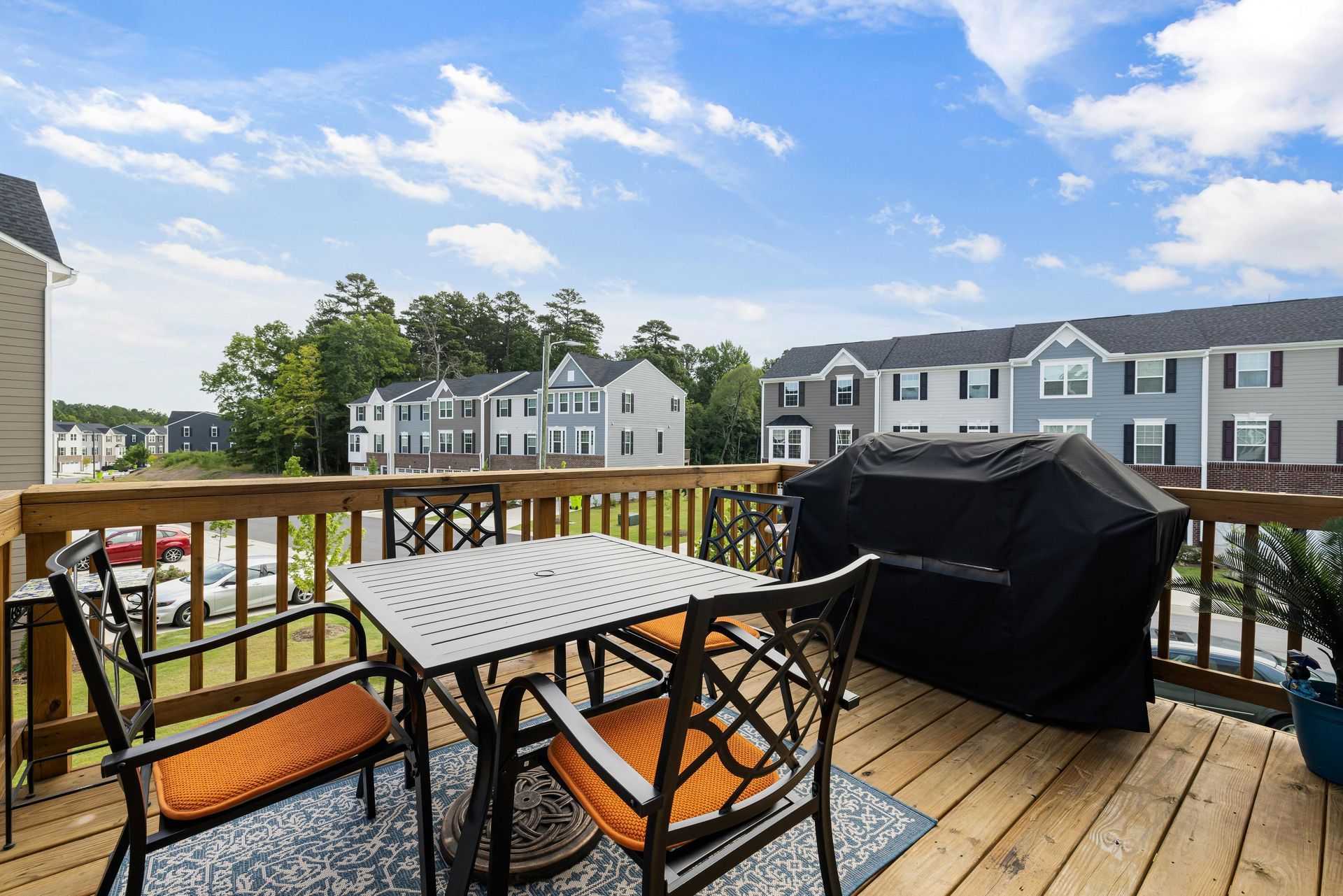
Decks That Handle High-Altitude Deterioration
Decks in Farmington for structures showing UV damage, dry-rot, and structural weakness from elevation exposure
UV exposure and dry air at Farmington's elevation cause rapid wood deterioration that shows up as surface checking, faded stain color, and dry-rot in areas where moisture collects then evaporates repeatedly in the low-humidity environment characteristic of the Wasatch Front. The Bald Guy Handyman provides deck construction and maintenance designed for these altitude-specific conditions, always checking structural support before beginning repair work to ensure the deck frame remains sound underneath surface damage. Wood sealer treatments protect against UV degradation and moisture cycling that accelerates deterioration at higher elevations where thinner atmosphere provides less UV filtration than sea-level locations receive.
Structural support inspection identifies joists, beams, and posts that show rot or weakness before surface boards get replaced, preventing the problem of installing new decking over compromised framing that will fail under load. Altitude-specific treatments use sealers formulated for UV protection and moisture regulation in dry climates rather than products designed for humid regions where different environmental factors dominate.
Arrange a deck inspection to evaluate structural integrity and surface condition before planning repair or maintenance work.
What Proper Deck Care Requires
Elevation-aware deck care addresses the specific deterioration patterns that occur in Wasatch Front environmental conditions, where intense UV radiation breaks down wood lignin faster than lower elevations experience and where dry air pulls moisture from wood fibers repeatedly as irrigation overspray or rain provides intermittent wetting. Structural checking confirms that support posts remain solidly anchored, ledger boards maintain proper attachment to house framing, and joists haven't developed rot where they contact beam members, which prevents catastrophic failures that occur when cosmetic repairs cover underlying structural problems.
You notice deck surfaces that maintain color without rapid fading, boards that remain smooth without excessive checking or splintering, and railings that feel solid rather than flexing under hand pressure. Water beads on sealed surfaces rather than soaking into grain, which indicates the wood is protected from the moisture cycling that causes dry-rot in elevated locations where humidity fluctuates dramatically between day and night.
Maintenance includes cleaning to remove dirt and mildew before sealer application, which ensures proper penetration and adhesion rather than sealing contaminants into the wood surface. Fastener inspection identifies screws or nails that have loosened as wood shrinks during dry periods, and replacement occurs before boards become tripping hazards or structural connections weaken beyond safe load capacity.
Answers to Frequent Service Questions
Deck maintenance and repair questions often focus on understanding how local environmental conditions create specific deterioration patterns that affect decision-making.
How does Farmington's elevation affect deck deterioration differently than lower altitude areas?
Thinner atmosphere at higher elevation provides less UV filtration, causing more intense radiation exposure that breaks down wood fibers faster, while low humidity creates dry-wet cycles as irrigation or rain temporarily wets wood that then dries completely in arid air.
What structural problems should be checked before surface repairs begin?
Support posts are examined for rot at ground contact points, ledger boards are tested for secure attachment to house framing, and joists are inspected where they rest on beams for moisture damage that compromises load capacity.
Why do wood sealers need altitude-specific formulation?
Products designed for humid climates focus on moisture exclusion while sealers for dry mountain environments must balance UV protection with allowing moisture release, because wood in arid climates needs to breathe rather than being locked in an impermeable coating that traps internal moisture.
When should deck sealing happen in the Wasatch Front climate?
Late spring or early summer application allows wood to dry completely after winter moisture while providing protection before peak UV intensity arrives, and temperatures need to stay above 50 degrees for proper curing.
What indicates a deck structure needs professional evaluation?
Visible sagging in deck boards, railing posts that move when pushed, stairs that feel bouncy under foot traffic, or localized soft spots where wood compresses under weight all signal potential structural issues requiring inspection before use continues.
The Bald Guy Handyman brings three decades of reliable service to every deck project, with dependable work backed by thorough structural assessment and clear communication throughout the process. Call (801) 645-4181 for a free estimate on deck construction, repair, or maintenance.